Why R&D Teams See a Blockbuster, While the Market Fails to Sell It?
Source: ICT Singapore Website | Author: Catherine Wong | Date: July 9, 2023
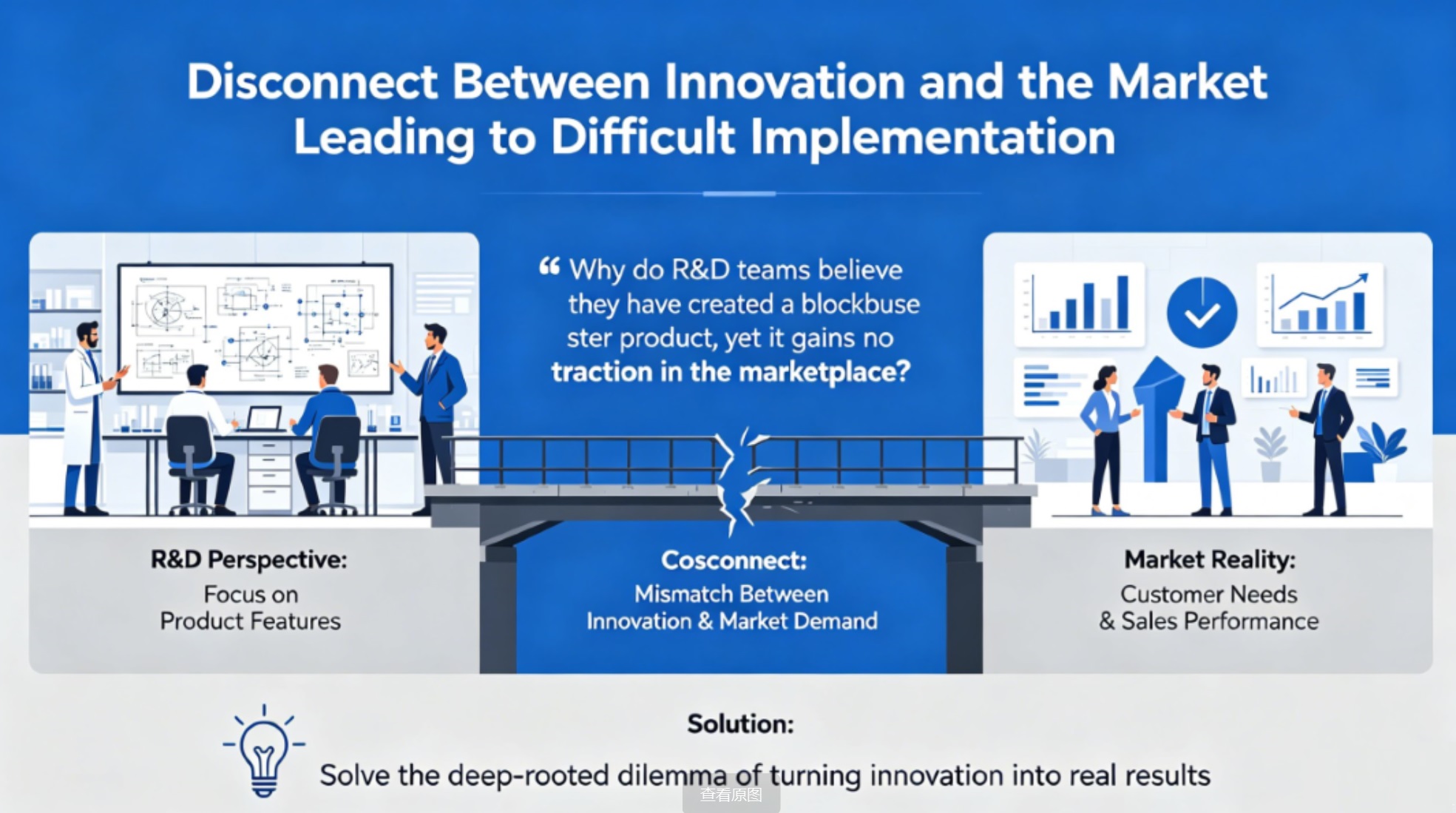
Disconnect Between Innovation and the Market Leading to Difficult Implementation
"Why do R&D teams believe they have created a blockbuster product, yet it gains no traction in the marketplace?"
—— Solve the deep-rooted dilemma of turning innovation into real results
I. Do These Challenges Plague Your Organization?
"The R&D team spent a whole year polishing a 'perfect' product with cutting-edge technology and powerful functions. However, the market responded: 'This is not what customers want.' The sales team also complained: 'The product is overpriced and impossible to sell.'"
"We invest hundreds of millions of yuan in R&D every year and obtain numerous patents, yet less than 10% of innovations translate into actual revenue. When leaders ask where the money goes, I have no answer."
"R&D blames sales for poor performance, sales criticize the product for being hard to market, and the marketing team says the product lacks compelling stories. Meetings turn into endless blame games. Innovative products end up shelved, never reaching real customers."
If these scenarios sound familiar, your organization is trapped by a covert yet critical issue: a valley of death separating innovation from the marketplace.
II. Four Typical Types of Innovation Disconnection — Which One Affects You?
Type 1: R&D-Driven Model — "We Believe This Is What Customers
Need"
Symptoms: The R&D team works in isolation, convinced that technological superiority is everything. By the time the product is completed, they find it fails to meet real customer demands.
Root Cause: Innovation is technology-oriented rather than customer-centric. R&D focuses solely on what we can develop, ignoring what customers actually need.
Type 2: Market Mismatch — "A Great Product, Yet Unaccepted by the Market"
Symptoms: The product boasts advanced technology, but suffers from high pricing, inappropriate application scenarios or poor launch timing. Customers comment: "It is well-made, yet useless to me."
Root Cause: Misalignment between innovation and market demand. Product positioning, pricing, distribution channels and promotion strategies are all out of touch with reality.
Type 3: Fragmented Workflow — R&D, Marketing and Sales Operate in Silos
Symptoms: Each department works independently. When new products are launched, marketing staff are unclear about selling points, and sales teams have no idea how to promote them.
Root Cause: Lack of cross-functional collaboration mechanisms. Innovation becomes separate tasks instead of coordinated teamwork.
Type 4: Rigid Organization — Cumbersome Processes Fail to Keep Up with Market Changes
Symptoms: Products go through layers of approval and repeated revisions from initial idea to official launch. By the time they hit the market, customer demands and industry trends have already shifted.
Root Cause: The organization lacks agility. Cumbersome procedures stifle innovation at the initial stage.
III. Unspoken Frustrations of Business Leaders
Pain Point 1: Heavy Investment in Innovation with No Visible Returns
"We pour hundreds of millions into R&D annually, but fewer than 10% of innovations generate revenue. I cannot explain where all the investment goes."
Pain Point 2: Persistent Divide Between R&D and Market Teams
"R&D thinks the market lacks technical understanding, while market teams believe R&D fails to grasp customer needs. Countless meetings fail to bridge the gap, turning innovation into internal conflicts."
Pain Point 3: High-quality Products Struggle to Gain Market Traction
"Our products feature leading technology and robust functions, yet they cannot sell well. Sales cite high prices, distribution partners complain about difficult promotion, and customers say they do not know how to use them. Where lies the real problem?"
Pain Point 4: Innovative Ideas Fail to Be Implemented
"We come up with plenty of innovative ideas every year, but very few are put into practice. The team attributes it to lengthy processes, insufficient resources and inadequate leadership support. What solutions can I adopt?"
IV. Why Conventional Approaches Do Not Work
|
Conventional Approaches |
Ineffective Outcomes |
Root Causes |
|
Increase R&D investment |
More funding brings no tangible output. |
Innovation cannot be achieved simply by spending money. Without in-depth market insights, additional investment is nothing but waste. |
|
Host product launch events |
Events draw great attention at first, yet the product is soon forgotten. |
A launch is just a milestone, not the final step. Without continuous support from marketing and sales, innovations cannot reach end customers. |
|
Optimize R&D workflows |
Streamlined processes still fail to boost product sales. |
The core problem lies in mindset, not procedures. No process improvement can help if R&D cannot understand customer needs. |
|
Commission market research by consulting firms |
Lengthy research reports are ignored by internal teams. |
External research cannot be fully absorbed by the organization. Reports are useless without team participation and recognition. |
|
Deliver cross-department communication training |
Learned skills are never put into practice. |
Poor communication is not the main issue. Conflicting interests and lack of mutual trust are the real barriers. Good communication skills mean nothing without trust. |
|
Offer higher sales incentives |
Sales push products merely for commissions and show no long-term commitment. |
Sales teams only focus on short-term sales performance rather than product value. Innovation requires long-term vision instead of temporary incentives. |
V. How Our Innovation & Transformation · Integration Upgrade Delivers Results
We provide more than regular training — a complete innovation system covering customer insight, product definition and market implementation.
Step 1: Gain Customer Insights — Shift from “Our Assumptions” to “Customer Needs”
What we do
We organize workshops for building the Dynamic Customer Demand Map, bringing together R&D, marketing and sales teams to engage with customers on-site. This helps everyone shift focus from what we offer to what customers need.
We adopt the Customer Pain Point & Value Positioning Tool to clearly define core problems solved by products and unique value delivered to users.
Why it works
Innovation starts with customers, not technology. When teams truly understand customer pain points, every innovative initiative has a clear target.
Step 2: Define Products — Shift from Technological Advantages to Market Competitiveness
What we do
We host Value Restructuring Workshops to redesign customer experience and value curves, converting technical strengths into market advantages.
We apply the Minimum Viable Product (MVP) methodology to verify product concepts quickly and test market response with minimum cost and lead time.
Why it works
Instead of developing products first and then trying to sell them, we ensure market viability before full-scale development. Aligning product design with market demands paves the way for successful sales.
Step 3: Collaborative Implementation — Shift from Siloed Work to Integrated Operations
What we do
We establish Cross-functional Innovation Accelerators, uniting R&D, marketing, sales and service teams as one integrated unit that takes shared responsibility for innovation results.
Through the 90-Day Lightning Breakthrough Program, teams refine collaboration mechanisms in real business scenarios and build capabilities through hands-on practice.
Why it works
Innovation is a coordinated campaign rather than a relay race. Full alignment across all departments accelerates the rollout of new products and solutions.
Step 4: Solidify Mechanisms — Shift from One-off Innovation to Sustained Innovation
What we do
We build a closed-loop system linking innovation and market feedback, enabling real-time delivery of customer comments, market data and sales insights to R&D teams and fostering rapid iteration capabilities.
With the Change Catalyst mechanism, we embed innovative methodologies into organizational DNA and make innovation a daily working habit.
Why it works
A truly innovative enterprise relies on sound systems, not occasional blockbuster products. With sustainable innovation mechanisms, steady market success becomes inevitable.
VI. Tangible Changes and Proven Results
|
Client |
Core Challenges |
Our Solutions |
Achievements |
|
Manufacturing Enterprise |
Caught in the dilemma of cost reduction and quality improvement; innovation disconnected from the market |
CQ Innovation · Restructure Product Logic |
Lower costs, higher quality and remarkable business growth. Modular product design is widely praised by customers. |
|
Financial Group |
New strategies stalled; difficult to implement innovations |
Strategic Alignment & Innovation Catalysis |
328 innovative ideas generated within 3 months; 100 projects launched, directly driving business growth. |
|
High-tech Enterprise |
Team confused amid the AI revolution |
CQ Leadership Program |
70% business growth in 9 months; customer satisfaction increased by 30%. |
|
Large Home Furnishing Chain Store |
Struggling with e-commerce impact and lack of innovative directions |
CQ Breakthrough · Value Restructuring |
Its transformation story was featured in a national documentary, setting a benchmark for the industry. |
VII. Client Testimonials
"ICT did not simply give us ready-made answers, but equipped us with a new perspective to find solutions. We not only developed disruptive products, but also built strong team confidence to tackle any business challenges."
— General Manager, Manufacturing Enterprise
"While everyone was discussing why innovations failed to land, ICT guided us to reflect on a more fundamental question: What value do we create for customers? This mindset shift turned our technology-driven innovation into market-leading competitiveness."
— Senior Management Team, Financial Group
VIII. Your Next Move
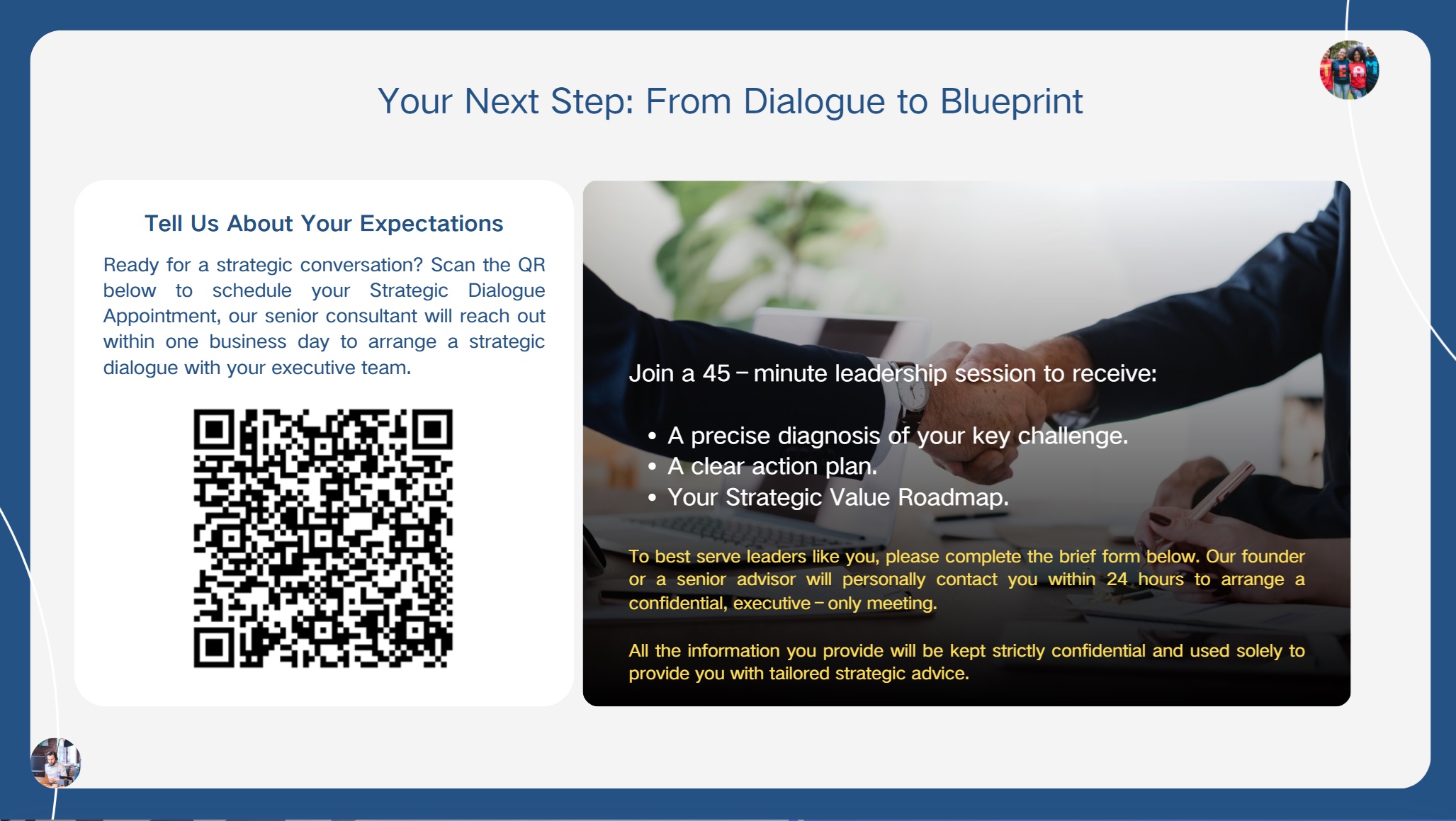
If your innovations win professional recognition but poor market performance, or if R&D, marketing and sales teams always work at cross-purposes, we invite you to join an in-depth innovation diagnosis session.
During this 60-minute closed-door meeting, we will: