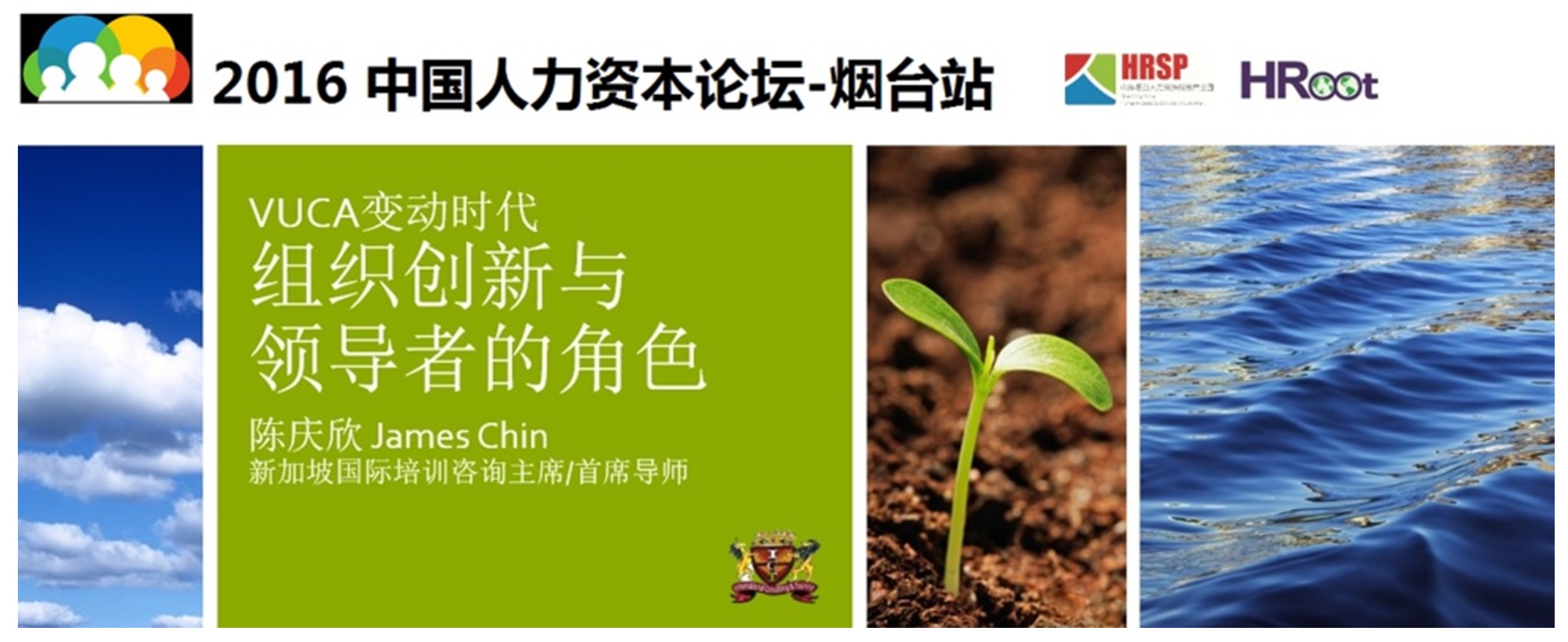
Organizational Innovation and the Leader’s Role in the VUCA Era
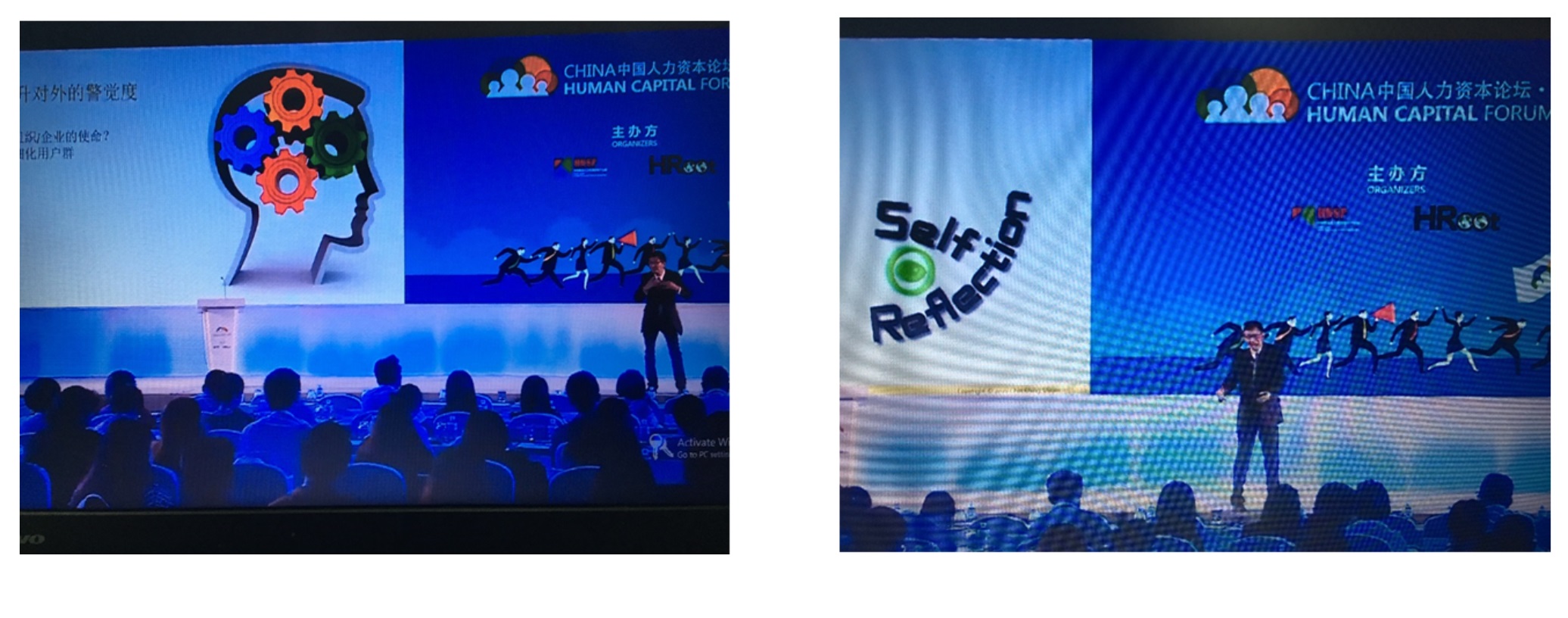
September 22, 2016 | Organizers: HRSP & HRoot | Speaker: James Chin
In 2016, the global economy faced growing headwinds and uncertainties, with a high likelihood of prolonged sluggish growth. Meanwhile, competition in trade and new technologies is accelerating China’s economic transformation and upgrading. Goldman Sachs’ latest report, Global Economic and Market Outlook, projects that China’s working-age population will decline by 0.47% annually over the next 25 years, gradually eroding the demographic dividend. To secure a competitive edge in the next phase of economic development, China must replace its demographic dividend with a talent dividend, advancing from a market-driven economy to a capital-driven one.
New economic models—the sharing economy, internet economy, Industry 4.0—and emerging technologies such as cloud computing and big data are profoundly reshaping enterprises’ future. They compel human resource (HR) management to evolve and innovate in step with the times. Under the influence of internet thinking, organizational boundaries are blurring, making organizational innovation the greatest challenge for corporate HR management. In the big data age, HR management must “speak with data”: behavioral patterns of employees can be quantified across all HR functions—examples include big data–powered performance management platforms and data-driven efficiency analysis systems. More importantly, HR departments must focus on core value creation: maximizing talent potential, fueling employee motivation and engagement, building dynamic, efficient new organizations, and continuously enhancing their own influence and impact.
In recent years, national economic strategies like the China–South Korea Free Trade Area (FTA) have positioned Yantai as a key hub for cross-border talent flow and cooperation between the two nations, thanks to its unique geographic location. This has opened unprecedented opportunities for Yantai’s HR services industry.
Against this backdrop, China Yantai Human Resources Service Industrial Park joins forces with HRoot—China’s largest HR media company—to host the 2nd China Human Capital Forum on September 22–23, 2016, at the Wanda Vista Yantai. The event will convene government policymakers, leading scholars from business schools and associations, and senior HR executives from Fortune 500 companies. It will serve as a high-level, forward-looking platform for dialogue, exploring the opportunities and challenges of human capital management amid shifting economic conditions, analyzing global HR trends, and charting the path for enterprises’ future growth.
Organizational Innovation and the Leader’s Role in the VUCA Era
Q1
As a seasoned HR expert, what key takeaways, insights, or transformations do you hope participants will gain from this national forum through on-site discussions? With mounting economic downward pressure, how do you expect the forum to revitalize the economy from an HR perspective?
Q2
Beyond first-tier cities like Beijing and Shanghai, Yantai is the only prefecture-level city to host the China Human Capital Forum. What is your overall impression of the event? How does Yantai differ from other host cities in terms of organization, team dynamics, speaker topics, forum format, participation, and influence?
Q3
Shandong is a major HR province, and Yantai plays a pivotal role in its economic landscape. In recent years, Yantai has advanced HR services innovation through the China Yantai Human Resources Service Industrial Park. Based on your observations at the forum, what are your impressions of Yantai’s HR services ecosystem? What are your aspirations for the industry’s development in Yantai and the broader region?
Q4
The China Human Capital Forum has been held twice in Yantai. As a returning speaker, what differences have you noticed in the China Yantai Human Resources Service Industrial Park’s approach to hosting the 2016 forum? What constructive suggestions would you offer for the park’s future development?
Q5
Yantai is a strategic node in the Bohai Rim Economic Circle and the Belt and Road Initiative, as well as a gateway city for the China–South Korea FTA. What impact do you believe the forum will have on Yantai and the Bohai Rim region—particularly in driving economic transformation, improving livelihoods, attracting and nurturing talent, and strengthening international cooperation?